
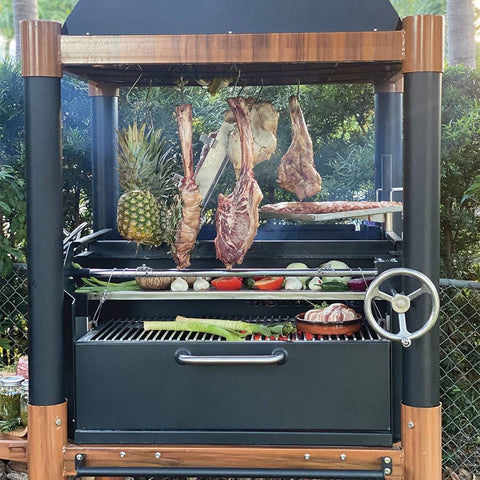
- An asado grill is an Argentine-style live-fire system built around embers, not open flames. A brasero (firebox) produces steady coals, and a height-adjustable grate controls heat by distance for precision cooking.
- It’s designed for multi-surface, multi-zone cooking. Grate for searing, plancha for delicate items, and controlled coal placement for slow finishing, all running simultaneously.
- The magic is in ember timing and simplicity. Clean hardwood embers, patience before cooking, and minimal seasoning (often just coarse salt) deliver cleaner flavor, better crusts, and fewer flare-ups.
At its core, an asado grill separates fire-making from cooking, giving you more control, better results, and a ritual-driven experience that’s winning modern backyards.
“Asado grills” typically refers to Argentine-style, live-fire systems designed around embers rather than constant flame. An asado grill setup focuses on a brasero (firebox) to make coals.
It has height-adjustable grates, which are often V-shaped. Sometimes, it includes a plancha or chapa, along with hanging fixtures or a cross. The result is precise heat control, clean rendering of fat, and versatility across tough cuts and delicate items alike.
In my own journey, an asado station became more than hardware. I grew up learning to light a wood fire, wait for the embers, and cook with nothing but coarse salt.
That ritual taught me two important lessons. First, respect the embers. Second, let simple ingredients shine.
Key components of an Argentinian Asado Grill
Modern asado grills (argentine style) revolve around four core elements:
- Brasero (firebox): burns hardwood to create consistent embers. You feed coals from the brasero under the cooking zone as needed. I still think of the brasero as the engine. My grandfather used that term when he taught me. He showed me how to move coals slowly instead of dumping them all at once.
- Round Grates: they are designed to provide even heat distribution and precise control over live embers, making them ideal for rotating, raising, or lowering food as needed. Their shape enhances balance, versatility, and consistent cooking across the entire surface.
- Height-adjustment system: a wheel, crank, or lever that moves the grate up and down lets you fine-tune heat without overcooking the exterior. Think of distance, not time, as your primary doneness control.
- Plancha: a flat steel plate that stabilizes heat for vegetables, sausages, eggs, thin fish, and crust development. It also doubles as a resting surface.

I cook on different surfaces at the same time. I sear on the grate, confit peppers on the plancha, and warm a small cut near the firebox. That multi-surface workflow is the hallmark of a great asado station.
Creating heat zones
- Build a clean, small fire in the brasero with seasoned hardwood (quebracho will be the best option if you can)
- After 20–30 minutes, embers are ready, bright red with a light ash coat. You do not waste that waiting window; you use it to prep ingredients and plan the order of service.
- Rake a modest layer of coals beneath the grate, keeping a reserve glowing in the brasero. Add or thin coals to steer temperature.
When to use plancha vs. grate
- Plancha: delicate items, vegetables, sausage links, smash burgers, or anything that benefits from even conduction.
- Grate: steaks, chops, ribs, and whole veg that profit from open-fire aromatics. Start higher; lower gradually to finish.
Types of asado grills
- Freestanding grills: self-contained frames with brasero and one or two cooking bays. Best for most backyards; easy to relocate.
- Asador cross (cruz): vertical or angled arms to secure whole cuts for slow, radiant cooking near the fire. Fantastic for gatherings, but demands space and wind awareness.
- Campfire or portable rigs are great for trips or small patios. They have lighter frames and fewer features. However, you can still use real asado techniques with a brasero and height control.

How to choose your asado or gaucho grill
Selecting the right “asado grill” (also called gaucho grill) is about planning for capacity, maintenance, and longevity.
Material: stainless vs. carbon steel (iron) vs. mixed
-
Stainless steel (304/316)
- Pros: corrosion resistance, lower maintenance, clean look, good resale.
- Cons: higher cost; can be springier at extreme heat if thin gauge.
-
Carbon steel (iron)
- Pros: excellent thermal mass, robust sear, typically lower cost.
- Cons: needs seasoning and dry storage; can scale/rust if neglected.
- Hybrid builds: stainless frames with carbon-steel grates or planchas balance longevity and performance.
Recommended sizes by party size
Use grate width as a simple heuristic (assuming one primary grate plus plancha):
|
Typical Guests |
Primary Grate Width |
Notes |
|
4–6 |
60–80 cm (24–32") |
One grate and a small plancha; great starter. |
|
8–10 |
90–100 cm (36–40") |
Two zones; handles mixed cuts comfortably. |
|
12–16 |
110–120 cm (43–47") |
Entertaining scale; consider dual grates/brasero. |
I’d rather buy a slightly larger grate and run a thinner coal bed than overcrowd food. Space equals control.

Multi-surface cooking with asado grills
The advantage of asado grills over conventional barbecues is concurrency. With a brasero feeding steady embers, you can:
- Sear thick steaks directly above a dense coal patch, then raise the grate to coast to target internal temperature.
- Slow-cook ribs or large cuts on the edge of the grate with a sparse coal bed.
- Light-smoke by adding a modest amount of fruitwood to the coal stream (clean blue smoke, never white and billowy).
- Hang sausages or small cuts on hooks near the firebox to warm, drip, and baste other items.
I often run three rhythms at once,searing, holding, and finishing. Done right, service is calmer and the food more consistent.
Rituals and ember timing
If there is one habit that changed my results, it is patience with the fire. My father taught me to wait 20–30 minutes until embers glow and flames subside before moving food onto heat. That pause delivers cleaner flavor, better crusts, and fewer flare-ups.
I still value the “asador bite.” It is that first taste taken from the grate by the fire. This feedback helps me adjust the salt, height, or coal density for the rest of the cooking.
Asado grills are great because they keep fire-making separate from cooking. They also let you control the heat easily. In my experience, the best results come from restraint: a compact brasero fire, patient ember timing, and simple seasoning, often just coarse salt. Good materials, the right size for your guests, and some smart accessories will last for years. They will make every gathering feel timeless.
TAGWOOD is the leading Argentine & Santa Maria Open Fire Grill in the World
About Tagwood
TAGWOOD BBQ specializes in Argentine and Santa Maria open-fire grilling equipment designed for outdoor cooking enthusiasts. Their product line emphasizes premium materials, functional design, and authentic open-flame barbecue tradition. The brand highlights its Argentine heritage and passion for grilling, rooted in culture and communal BBQ experiences.
FAQs
What distinguishes an asado grill from a Santa Maria grill?
Both use height-adjustable grates and live fire. Asado setups emphasize a separate brasero to generate embers continuously, V-shaped grates that channel fat, and optional plancha/hanging fixtures. Santa Maria models commonly feed logs directly under the grate.
Do I need a brasero?
Strictly speaking, you can cook over a small wood fire, but a brasero produces cleaner, steadier embers and better temperature control. It is the most impactful upgrade.

